
Amazon Sponsored Brand Ad format redesign
Apr ~ Aug, 2025
Reimagining Sponsored Brands to reduce friction in every shopping journeys and enable more intuitive, engaging brand discovery.
My role
As the sole UX designer on this project, I led the end-to-end design process, partnering closely with PMs and engineers to explore multiple solutions and define the overall product direction. By leveraging shopper insights and past performance data, I designed a modular ad format that achieved significant business and user impact.
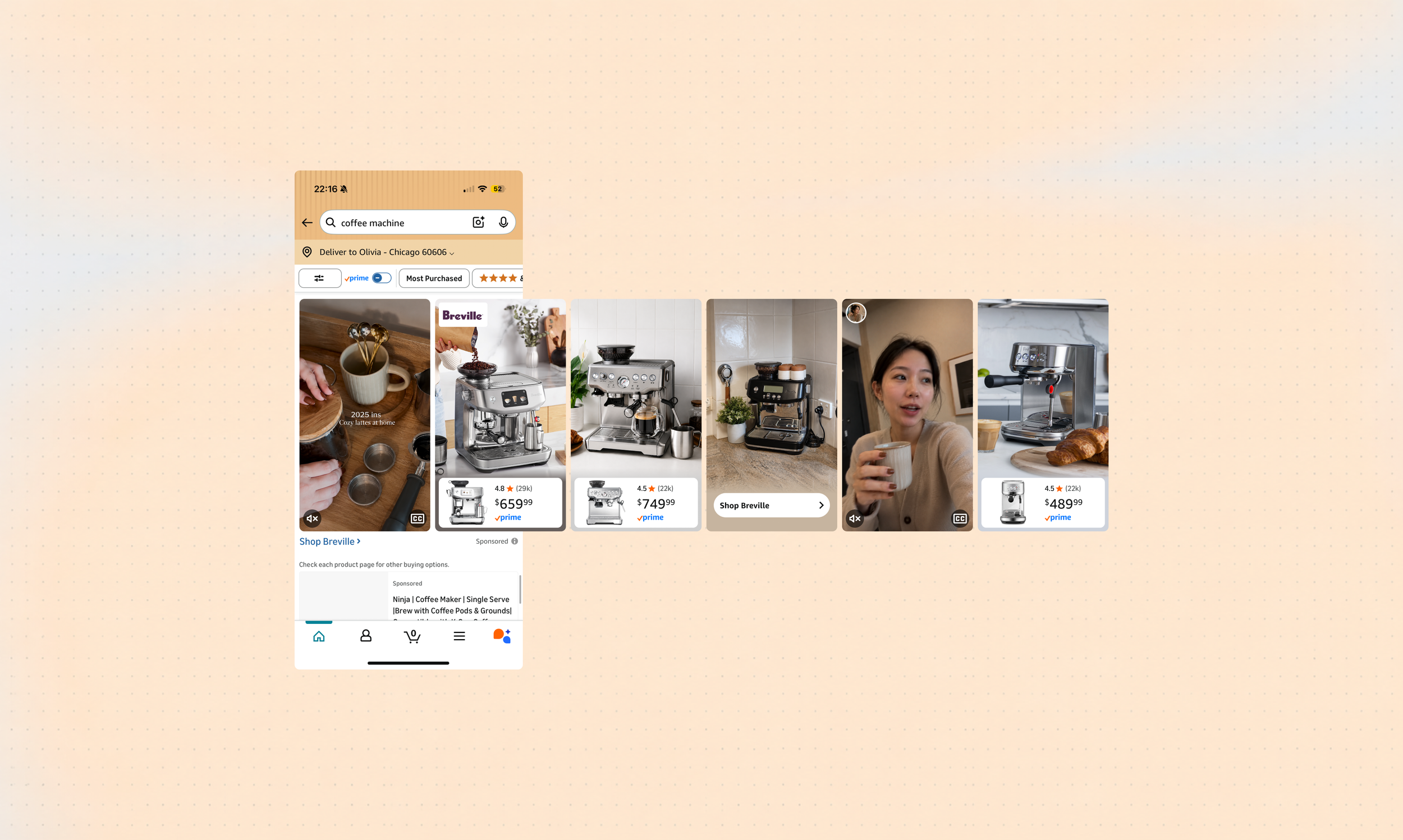
Customer pain points
Shoppers feel less confident making purchase decisions without sufficient brand storytelling.
Advertisers seek to improve brand awareness and consideration through more engaging ad formats.
Approach
Leveraging insights from user research and experiment learnings to guide design decisions
Working backward from both shopper and advertiser needs to create an experience that benefits both customers
Designing a modular ad format that dynamically curates content based on shopper signals
Outcome
The modular SB ad format met all launch criteria and launched globally across all marketplaces, this strategy improved shopper engagement and business performance. The experiment validated that this design approach could improve both shopper discovery and advertiser performance at scale.
Learn from current experience
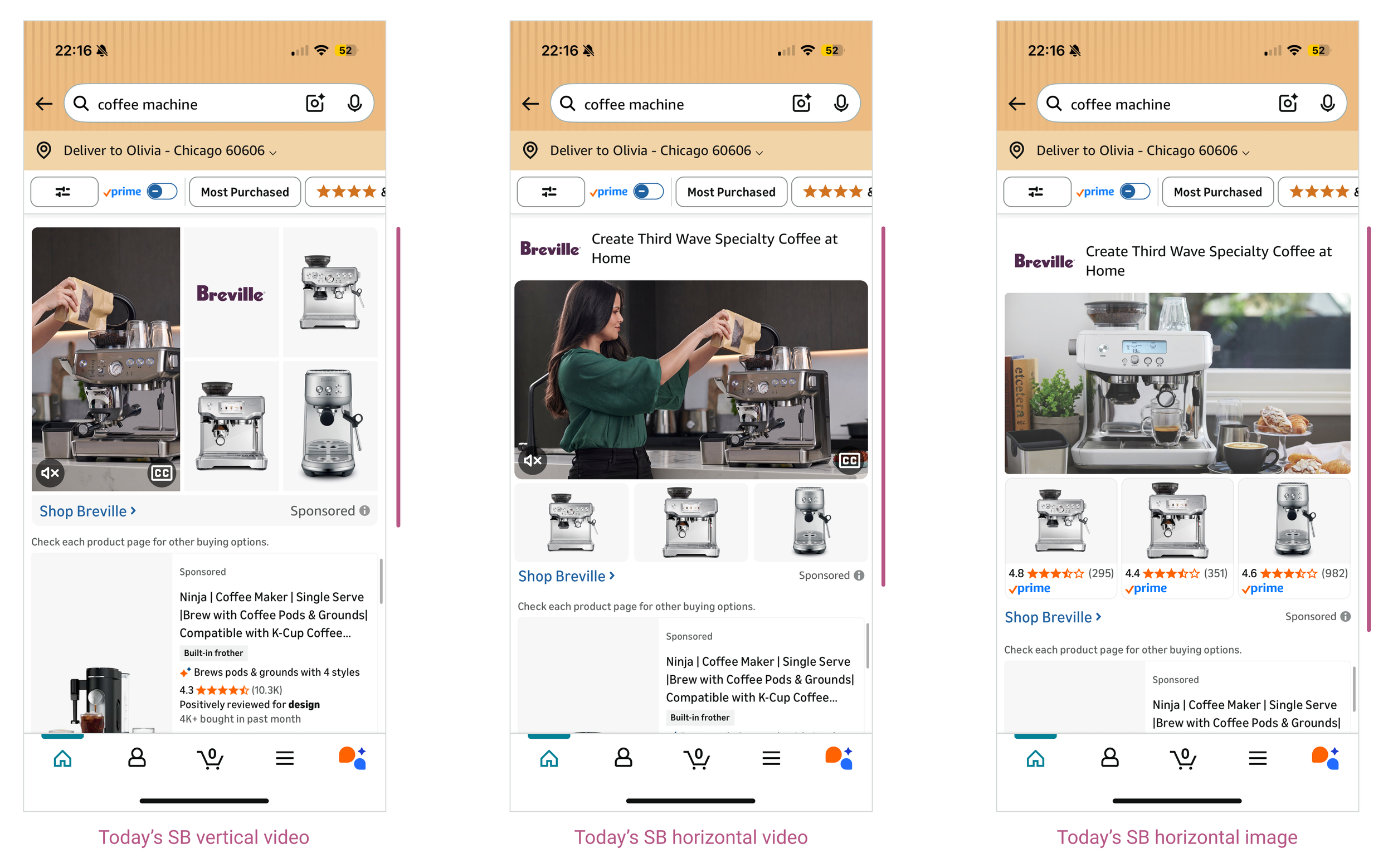
We previously experimented with several Sponsored Brands (SB) ad formats in above-the-fold placements, the following formats and shopper feedback helped shape the initial direction of the redesign.
🗣️ "We want to reuse our Instagram and TikTok videos if Amazon offered a format that supports them."
🗣️ "Love seeing genuine interactions between real customers and products in a video format"
🗣️ “I can’t tell the differences between these products from the ad.”
🗣️ "I’m open to trying new brands if they feel high-quality and worth it."

44% of SB ad formats lack lifestyle content, while video format drives 25% higher CTR than static formats
~78% of search queries are brand agnostic
Shoppers are using generic searches to discover something new.
Besides the voice of customers, we also found:
Design Strategy
Through these experiments, I observed that media drove stronger shopper engagement, but current ad format lacked flexibility to adapt to different shopper intents. From the anecdotes and research, I identified a gap between the lack of content that helps shoppers discover brands and advertisers’ rich media for storytelling.
To address this, I defined the following design strategies:
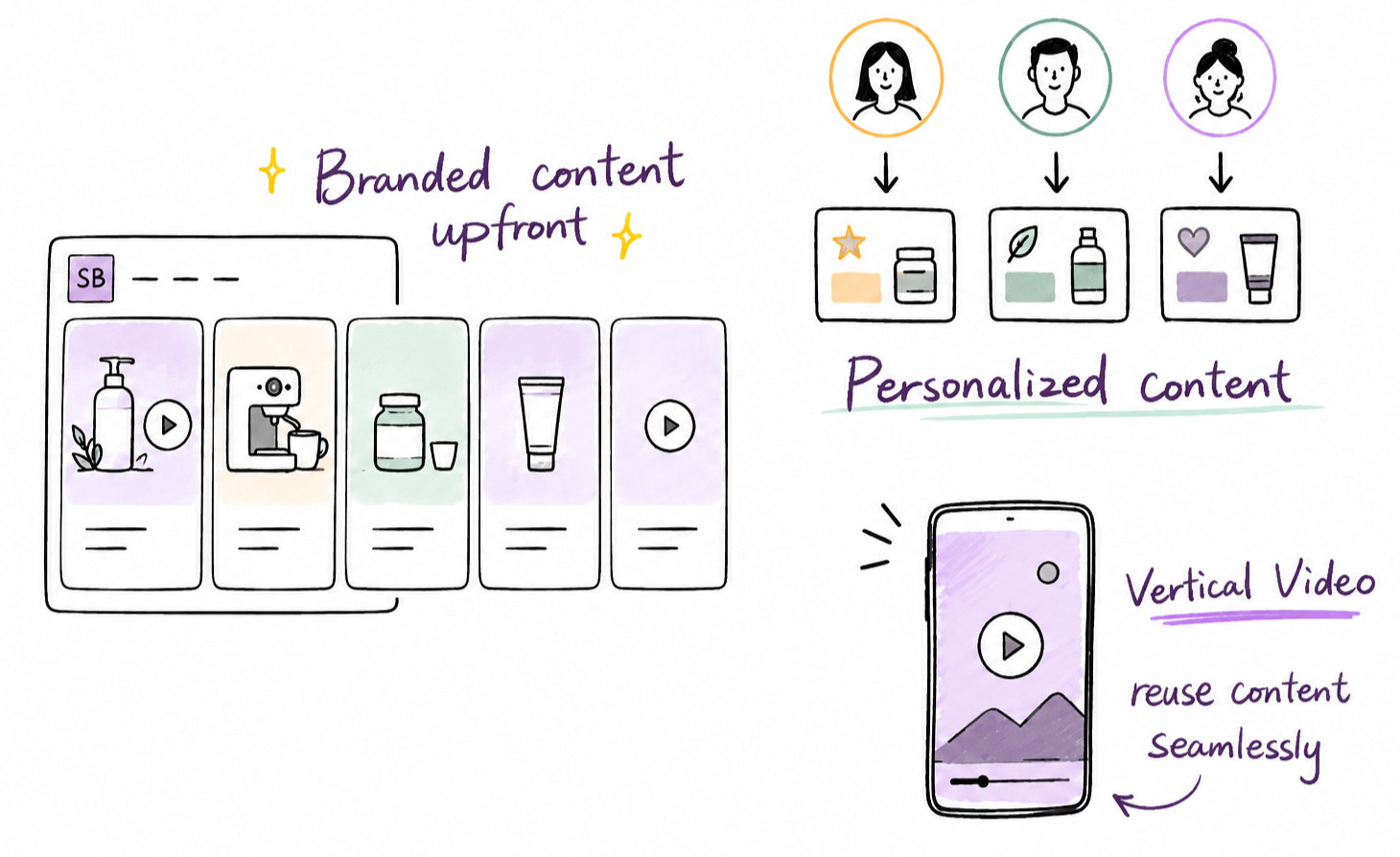
Redesigning the ad format into a modular template to enable dynamic personalization
Leveraging vertical video assets to enable seamless reuse of advertisers’ existing content
Over 75% of shoppers are open to discovering new brands
But they lack branded content to build trust and confidence in making a purchase

Problem statement
💭 How might I design a modular ad format that dynamically curates content based on shopper signals while enabling advertisers to tell their stories?
Proposal
for broad search queries
📍The goal at this stage is to spark desire or address a shopper’s want or need.
Shopper behavior
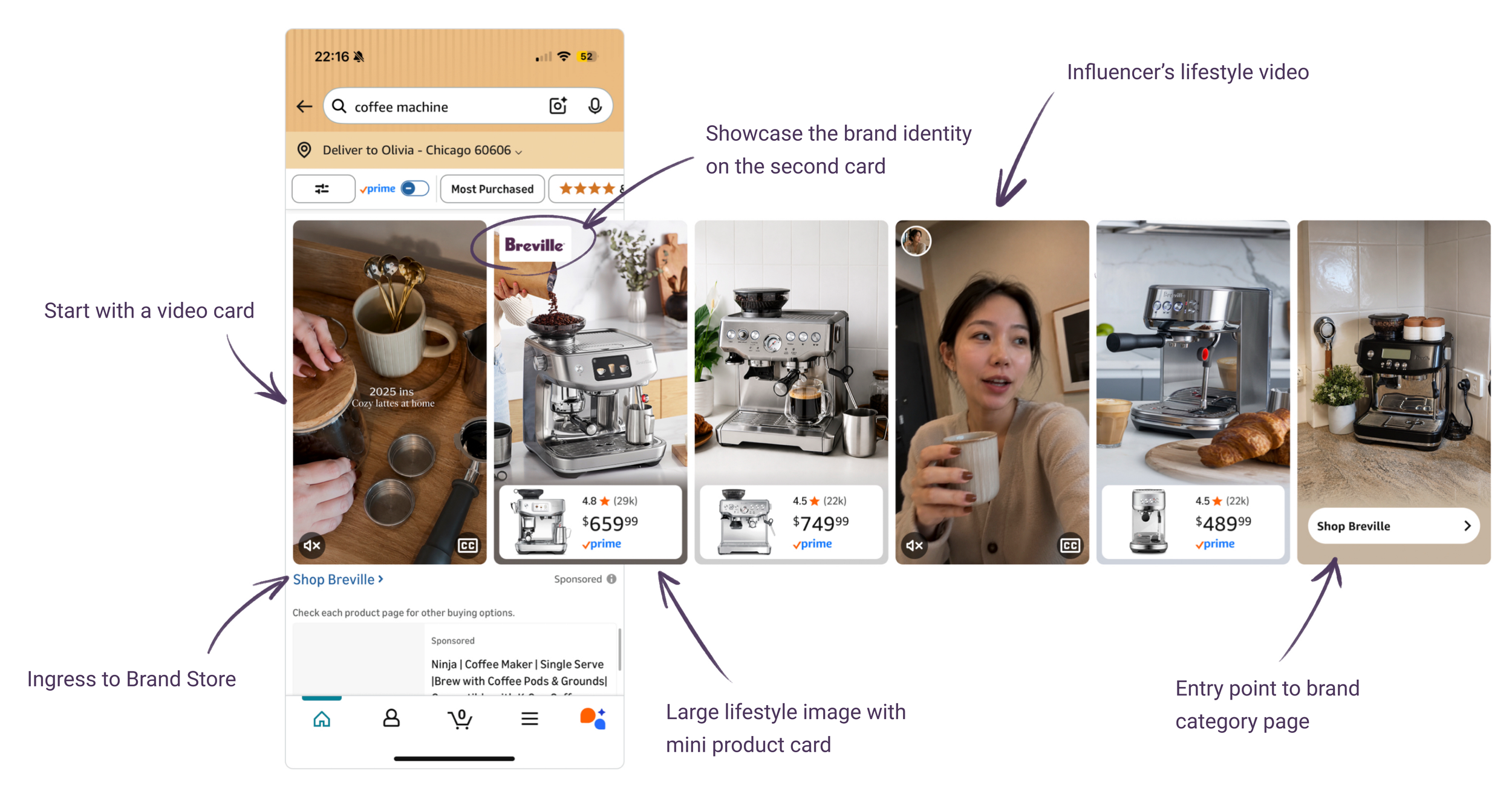
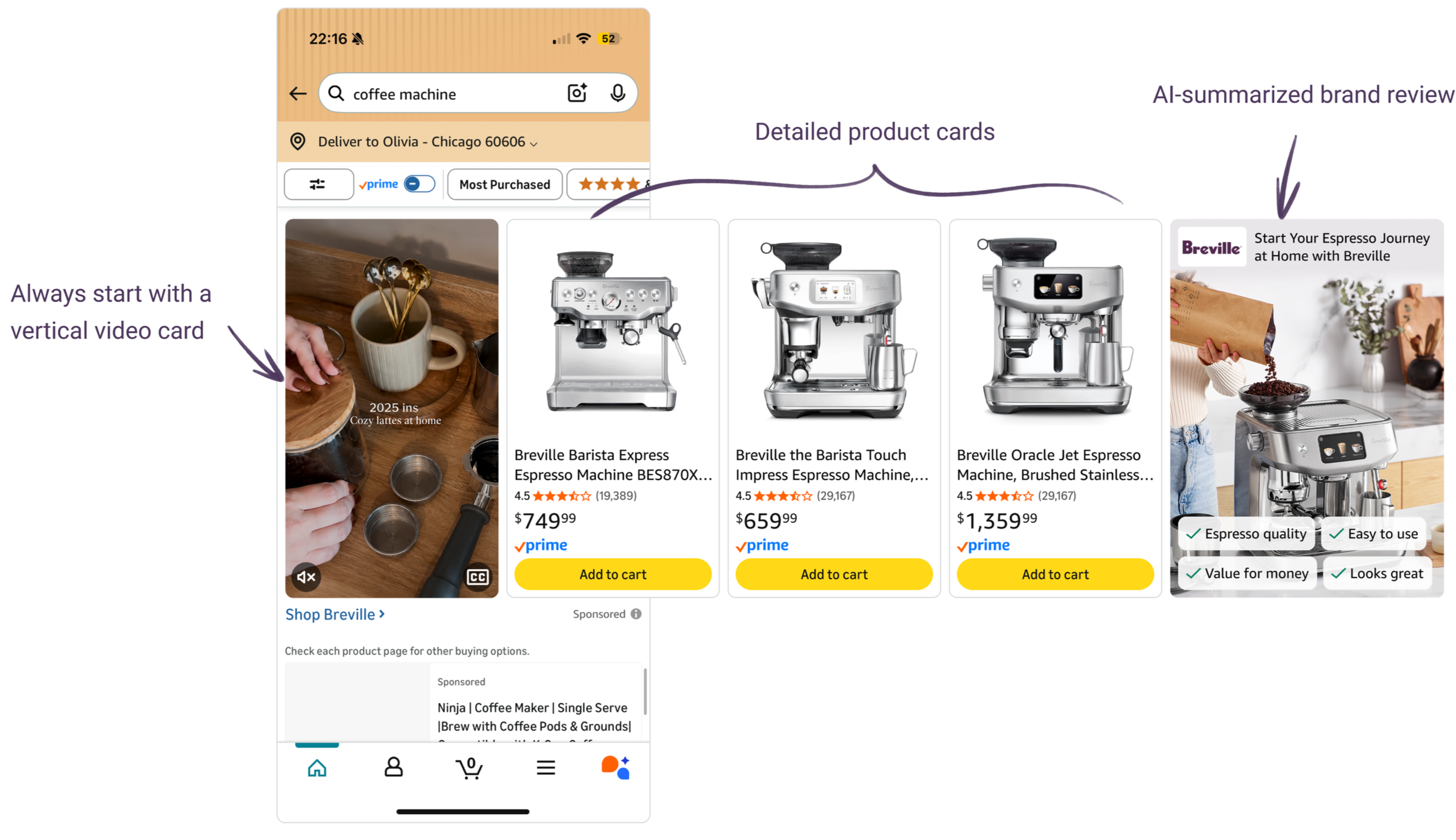
In the early stage of the shopping journey, search queries are often broad and generic (e.g., “coffee machine”). Shoppers are open to content that aligns with their past interests or shopping behavior, as well as content that feels new, trending, or unexpectedly delightful.
What I designed
To deliver the right content, I prioritized media-oriented cards that highlight brand identity and lifestyle imagery, while giving advertisers more storytelling opportunities to help shoppers feel inspired and understood.
for branded search queries
📍The goal at this stage is to help shoppers feel confident in their purchase decisions.
Shopper behavior
When shoppers are in the deep research stage, search queries often reflect stronger brand intent and clearer purchase goals (e.g., “Breville espresso machine”). At this stage, shoppers are looking for validation that the product matches their needs and expectations.
What I designed
To support product evaluation, I prioritized detailed product cards that surface the key information shoppers need to compare options and build confidence in the product. Video content focuses on real product usage to help shoppers better understand how the product fits their needs.
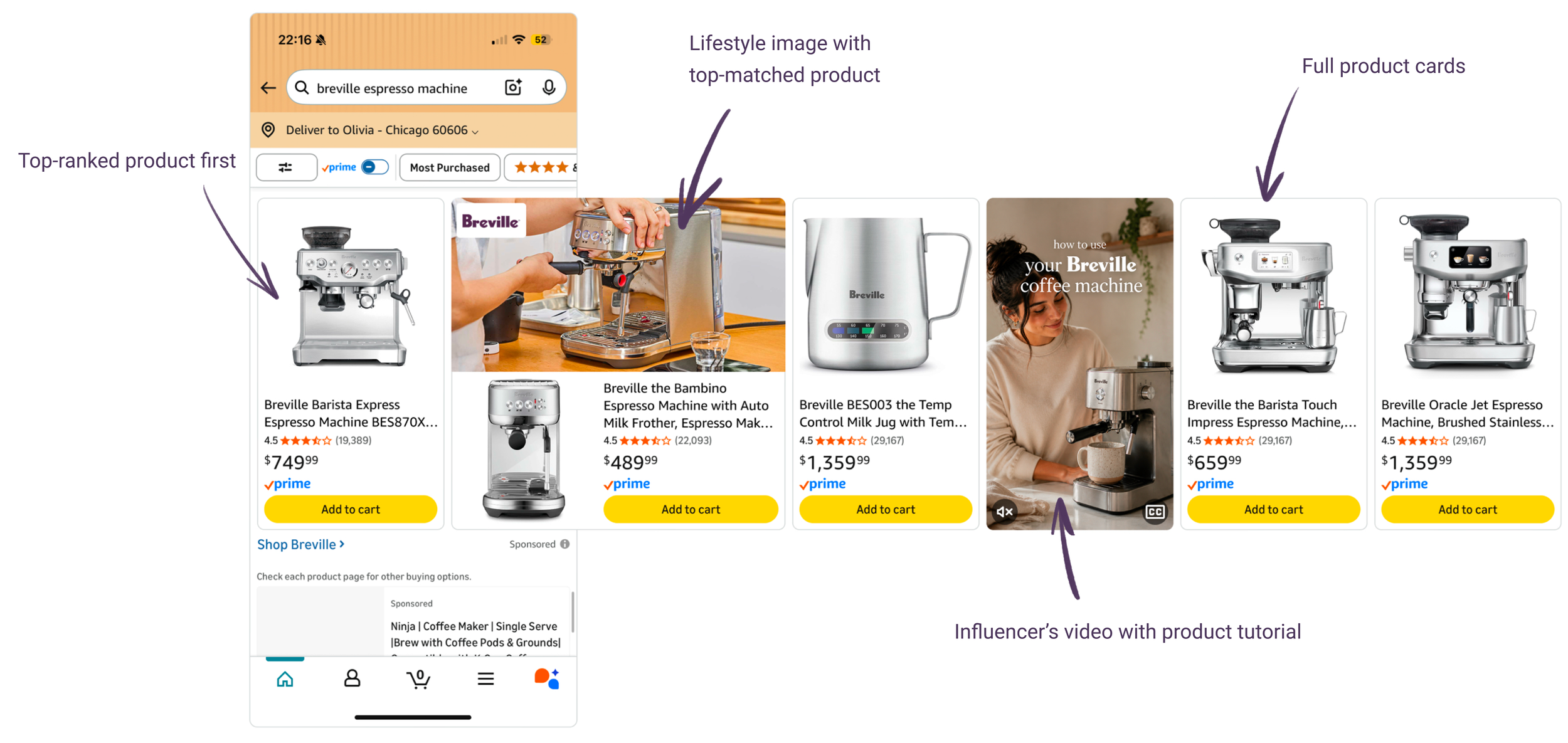
Through several rounds of design reviews with stakeholders and presented to leadership, I identified several scalability challenges that could impact the long-term adoption of the experience into two main areas.
Limitations & challenges
Limited shopper signals
Dynamically curated content heavily depends on data availability, such as shopper signals, historical search queries, and purchase preferences. However, these signals are only available for logged-in shoppers.
How might we adapt the experience for shoppers without enough personalization signals?


Limited media assets
When we kicked off this project in Q2 2025, Amazon had more than 825.4K Brand Stores, with large differences in the quality and quantity of branded assets across brands.
How might the modular ad format still work well for brands with limited content resources?
Design iteration I:
Designing with query-only signals
For shoppers with limited personalization signals, the search query becomes the only signal we can leverage.
For broad search queries, from shopper insight, video ads drive 25% higher CTR than static images, the experience always starts with a vertical video card, followed by a partially exposed product card to quickly capture shoppers’ attention. AI-generated review cards surface key brand highlights and help build shopper confidence even when personalization data is unavailable.
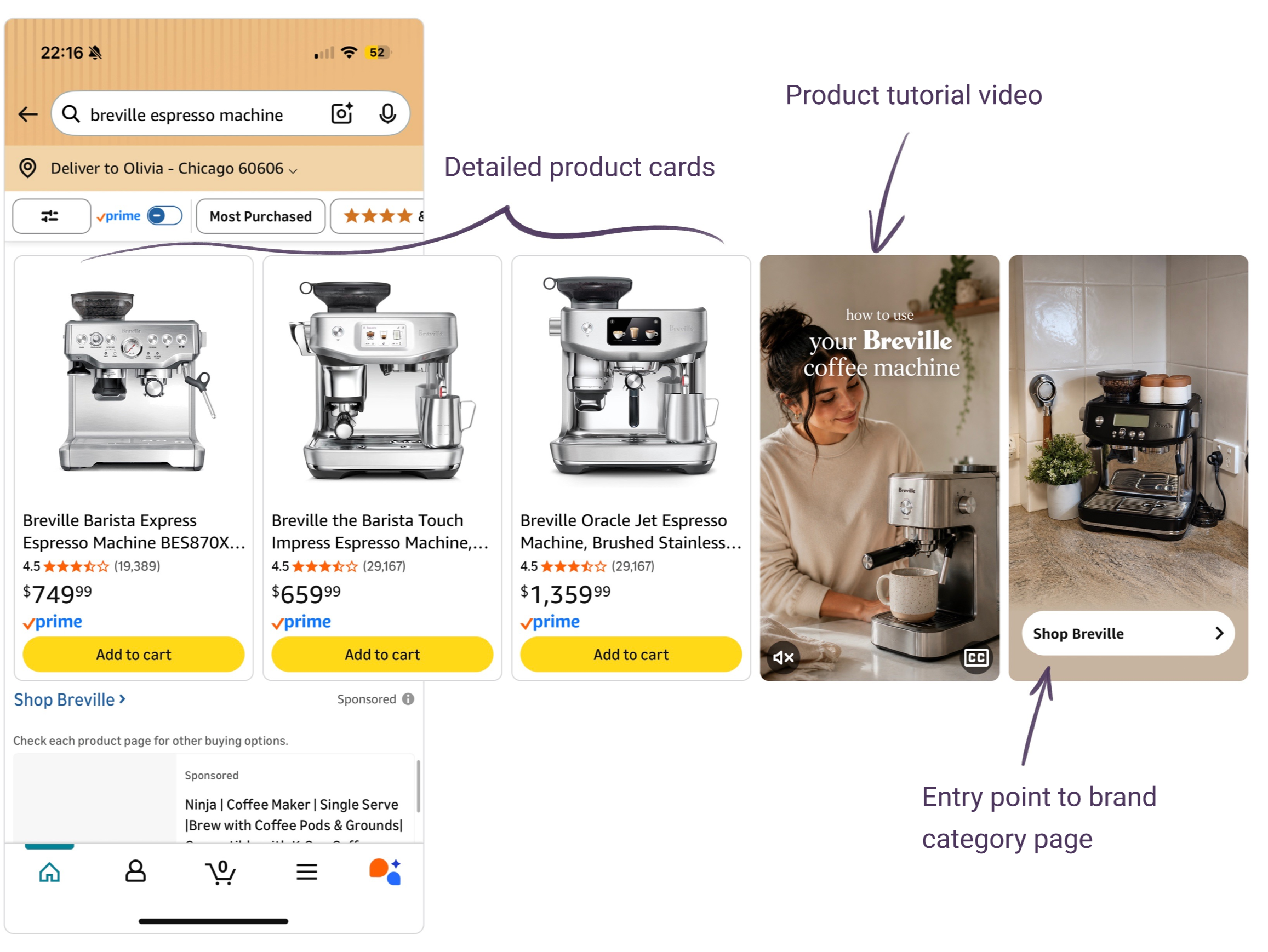
For branded search query, we assumed shoppers already have interest in the brand, so surfacing more product offerings would better match their expectations. Product tutorial videos and direct links to brand category page will encourage shoppers for further discovery.
Design iteration II:
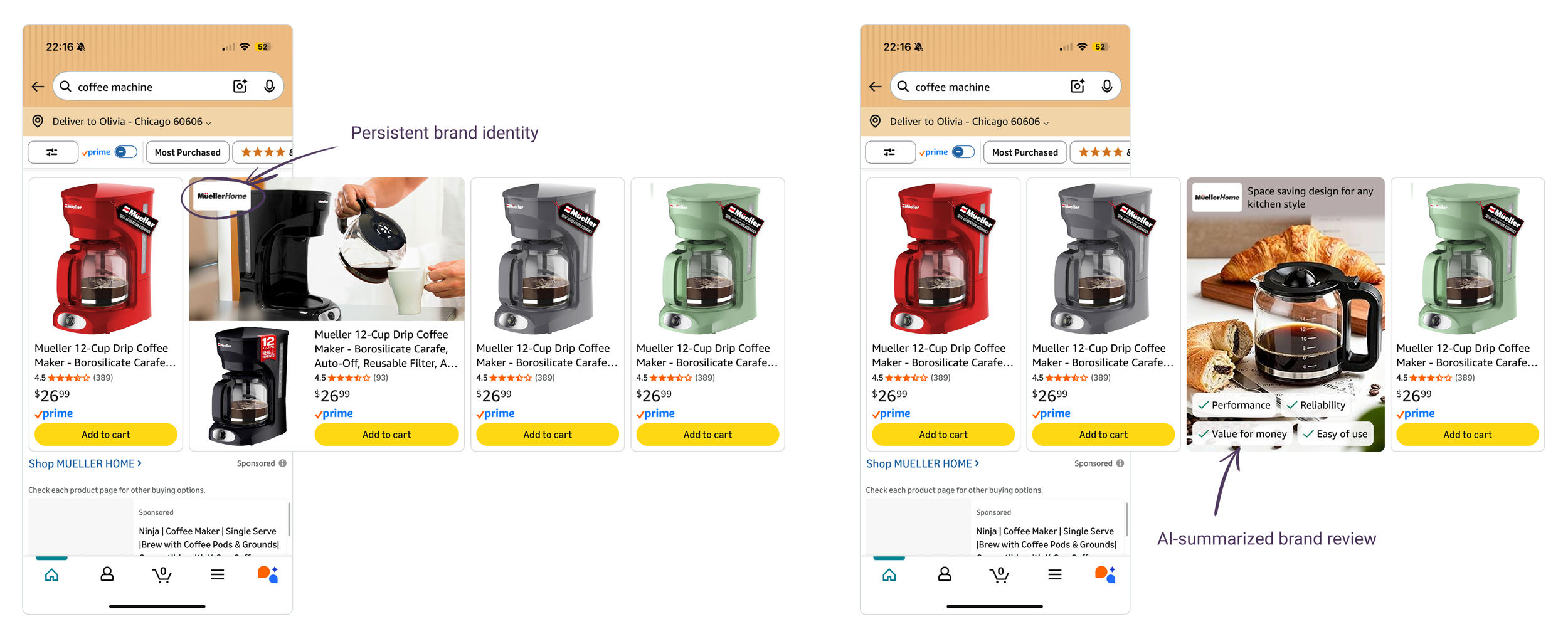
Considerations for brands with limited media assets
Based on our internal Store Quality Score data, over 603K Brand Stores (73% of the total 825.4K) were classified as low or medium quality, which means many brands still face challenges in creating engaging rich media and storytelling content. The ad format should provide flexible variations that showcase the most engaging content without requiring too much input from advertisers.
Outcome
After a 5-week experiment in Q3 2025, the modular SB ad format met all launch criteria and guardrails, we launched it globally across all marketplaces. The experiment validated that a more modular and media-forward SB layout helped shoppers discover products more effectively while improving advertiser performance.
We saw positive lifts across key business metrics, including: